Powering AI processors – 48V vertical power delivery changes the game
AI models demand huge current, driving legacy multiphase designs past 50 phases—causing space, thermal, and control limits Vicor addresses


A key factor in designing high-density power devices is the thermal performance of the internal circuitry. Vicor maximizes efficiency to reduce the losses as far as possible when designing these devices. Even so, the heat generated by residual losses must be dissipated to avoid overheating, which has a direct impact on reliability.
As with the electrical test equipment, much of the all-important thermal testing equipment has been developed by the Vicor R&D department. The sophisticated wind tunnel system is one of the best available on the market, but the specialized thermal measurement equipment, product interfaces, specialized thermocouples and analysis systems are all designed and built in-house.
All test stations, and many non-production ATEs, include sensitive thermal cameras to identify potential hot-spots within the device to ensure the product does not exceed the thermal parameters under all load conditions in order to maximize performance, density and reliability. This detailed thermal analysis, extensive burn-in and the subsequent test data obtained is also used as a direct feed for Vicor comprehensive data sheets.
Vicor considers its high level of investment in design and testing essential to ensure that comprehensive, real-world data are obtained. Investment in development and tools is a top management priority within the company; every operation is equipped to do the job thoroughly. The company’s R&D budget is a high priority and is funded generously as part of the company’s strategy to invest in innovation.
In addition to the accuracy and detail of product datasheets, the investment also means that customers benefit from the many tools and resources available from Vicor. The Vicor suite of tools includes a web-based comprehensive solution selector that enables customers to select the best product for the application together with simulation to show exactly how the product behaves under all conditions. The Whiteboard helps customers configure their own optimized system solution, allowing them to simulate and evaluate performance at a power system level. Test date from real devices is used as the data feed for tools like the Whiteboard ensuring very high accuracy.
Wind tunnel used for thermal testing
Wind tunnel used for thermal testing
Orthogonal thermal conductivity matrix representation of PCB trace and via geometry
Orthogonal thermal conductivity matrix representation of PCB trace and via geometry
Powering AI processors – 48V vertical power delivery changes the game
AI models demand huge current, driving legacy multiphase designs past 50 phases—causing space, thermal, and control limits Vicor addresses
Innovative 48V AI power architecture delivers both high current density and high current gain
Vicor 48V Factorized Power Architecture slashes thermal losses and delivers high current density to meet the extreme power demands of AI processors
48V Factorized Power Architecture™ slashes thermal losses and outperforms multiphase approach when powering AI
AI hardware faces severe power and cooling limits. Engineers debate 48V vs. 6V intermediate buses alongside new vertical power delivery (VPD) structures
Betterfrost: Putting on the heat
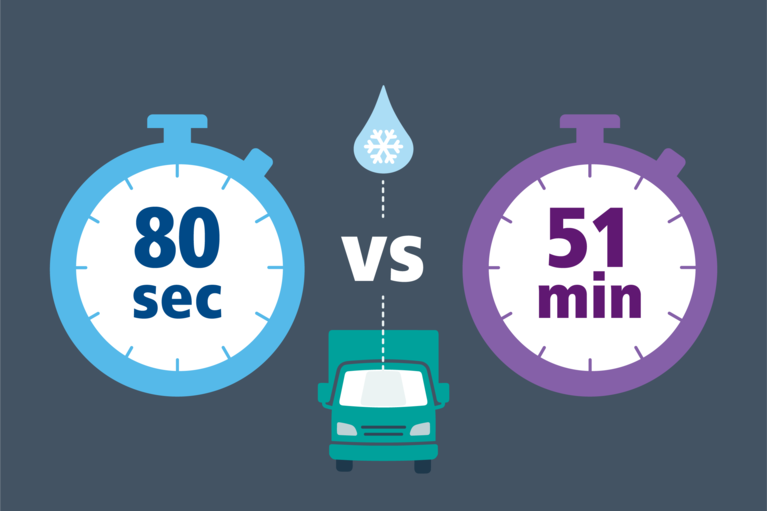
Betterfrost uses a 48V module for pulsed, conductive glass heating, clearing ice in under 80 seconds while cutting start-up defrost energy by 95%